
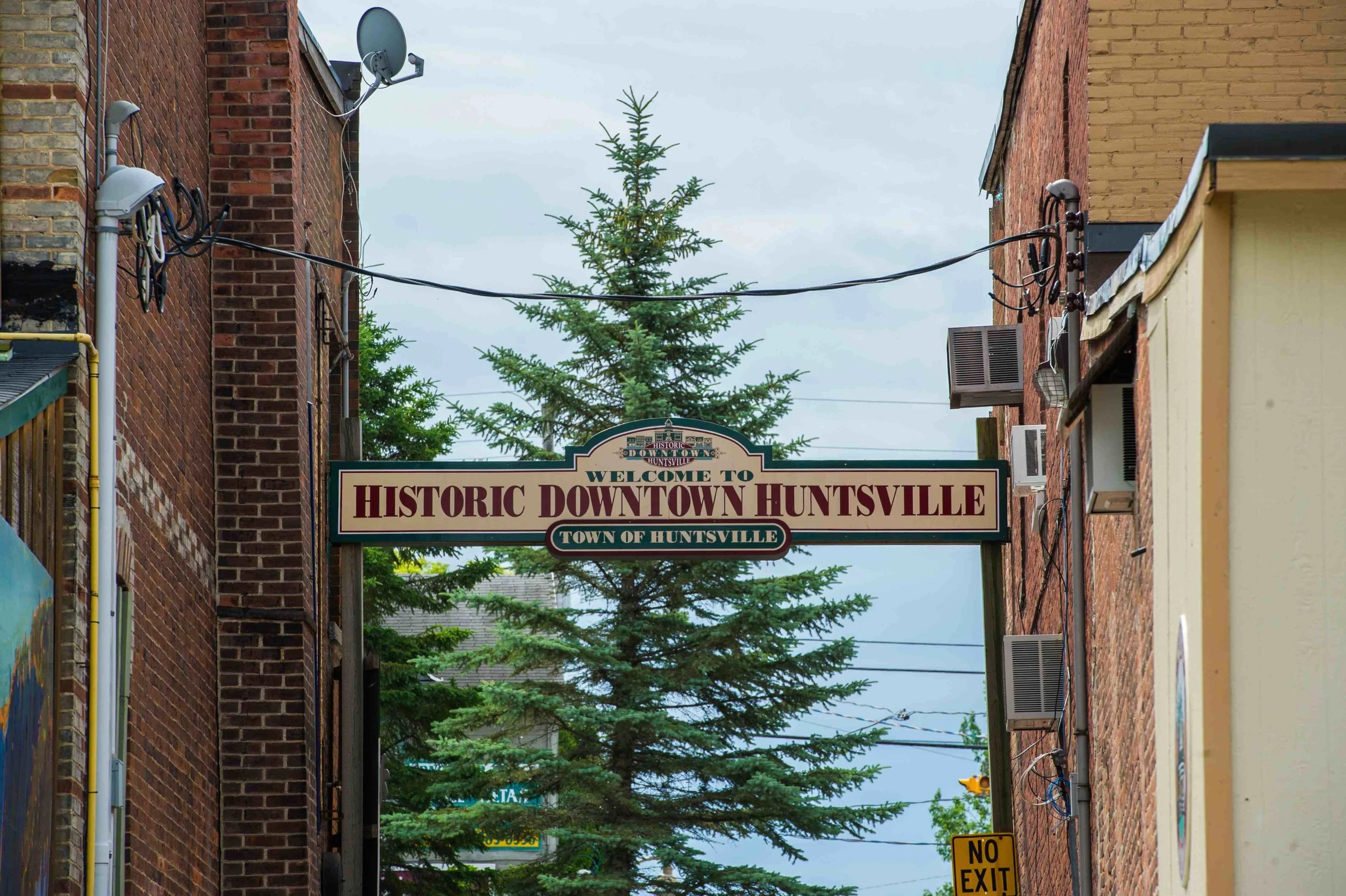
The Downtown Huntsville Business Improvement Area (BIA) is an organization made up of local business and property owners in downtown Huntsville, Ontario, that works together to support and strengthen the economic and social life of the core business district. Its main mandate is to create and maintain a vibrant, accessible, and attractive commercial, shopping, and entertainment environment that benefits both members and visitors. The BIA is funded through a property tax levy on commercial property owners within its boundaries, with the funds invested directly in projects that improve the downtown experience.
For business owners, the Downtown Huntsville BIA provides marketing, promotions, and business support that help attract customers and increase visibility. It organizes and promotes a variety of events and festivals—from seasonal markets and cultural celebrations to public art initiatives like the Group of Seven Outdoor Gallery—that draw both locals and tourists to the downtown core. These activities not only help promote individual shops and services but also build a sense of community and identity for the area. The BIA also focuses on streetscape improvements and beautification, such as decorative lighting and flower plantings, which enhance the look and feel of downtown, making it a more appealing place to shop, dine, work, and play.
The Downtown Huntsville BIA’s Board of Directors is composed of volunteers who are chosen by the BIA’s membership and appointed by the Town Council. The Board includes business and property owners from the mandated area, as well as a member of the Huntsville Town Council. The Board is supported by the Executive Director.
HISTORY OF BIA
What is a BIA? You may have heard of the Downtown Huntsville BIA. But what is that? Well, the BIA portion of the Downtown Huntsville BIA stands for Business Improvement Area, but that still won’t tell you much. So, let’s travel back in time about 55 years.
The situation was grim for business on a west Toronto main street. Business was on a decline. Stores were closing. Vacancy levels were rising quickly. Downtown streets were becoming run-down. The situation was dire, and the businesspeople in the community started to fight back. It took several years, but in 1970, a group of businesspeople succeeded in creating an association, backed by municipal and provincial legislation, that required all businesses in their downtown to contribute funds to the betterment of the area. Spending their own money, the businesses began street improvements and promoting the area. It paid off. A popular shopping destination was born and remains strong today. Perhaps you’ve heard of Bloor West Village, which is celebrating its 55th anniversary as a BIA this year.
Bloor West Village was the first BIA. The concept has caught on: there are now 64 BIAs in Toronto, more than 230 across Ontario (including our own Downtown Huntsville BIA), and 300 across Canada. BIAs are found internationally, including the US, Great Britain, Australia, and elsewhere. These BIAs vary widely in membership size, business mix, geographic scope, and other attributes. They all, however, share a desire to improve their business districts and enhance their community at large.
The Downtown Huntsville BIA, like other Ontario BIAs, is municipally legislated. Our main source of funding is an additional property tax levy paid by commercial property owners (falling within our designated geographic area). Because the BIA levy money is used directly towards improvements in the business community that pays for it, you might even call it a self-help program designed to stimulate business growth. In the Downtown Huntsville BIA, our funds are directed to streetscape improvements, beautification efforts (such as Christmas lighting and flower planting), downtown marketing and promotions, community events, our Group of Seven Outdoor Gallery project, and more.
Even though times have changed since 1970, the need for BIAs is just as strong as it was when Bloor West Village was formed. Bloor West Village was facing a drop in customers when the subway system replaced the street trolleys. Their situation was compounded by the proliferation of shopping malls on the city's outskirts, where customers were drawn by climate-controlled shopping and free parking. This is not so different from today’s challenges of big-box retail developments and the strong shift away from local shopping toward online shopping.
But as long as a strong downtown remains the heart of the community and is supported by the efforts of people who live, work, and play there, the Downtown Huntsville BIA will continue to work hard to support our nearly 120 property owners, businesses, and service provider members.
Supporting documentation for this article was taken from printed material of the Toronto Association of Business Improvement Areas.